Sometimes the simplest messages are the hardest ones to believe.
People often describe The Pit as a smoking area.
That isn’t wrong.
It just isn’t the whole story.
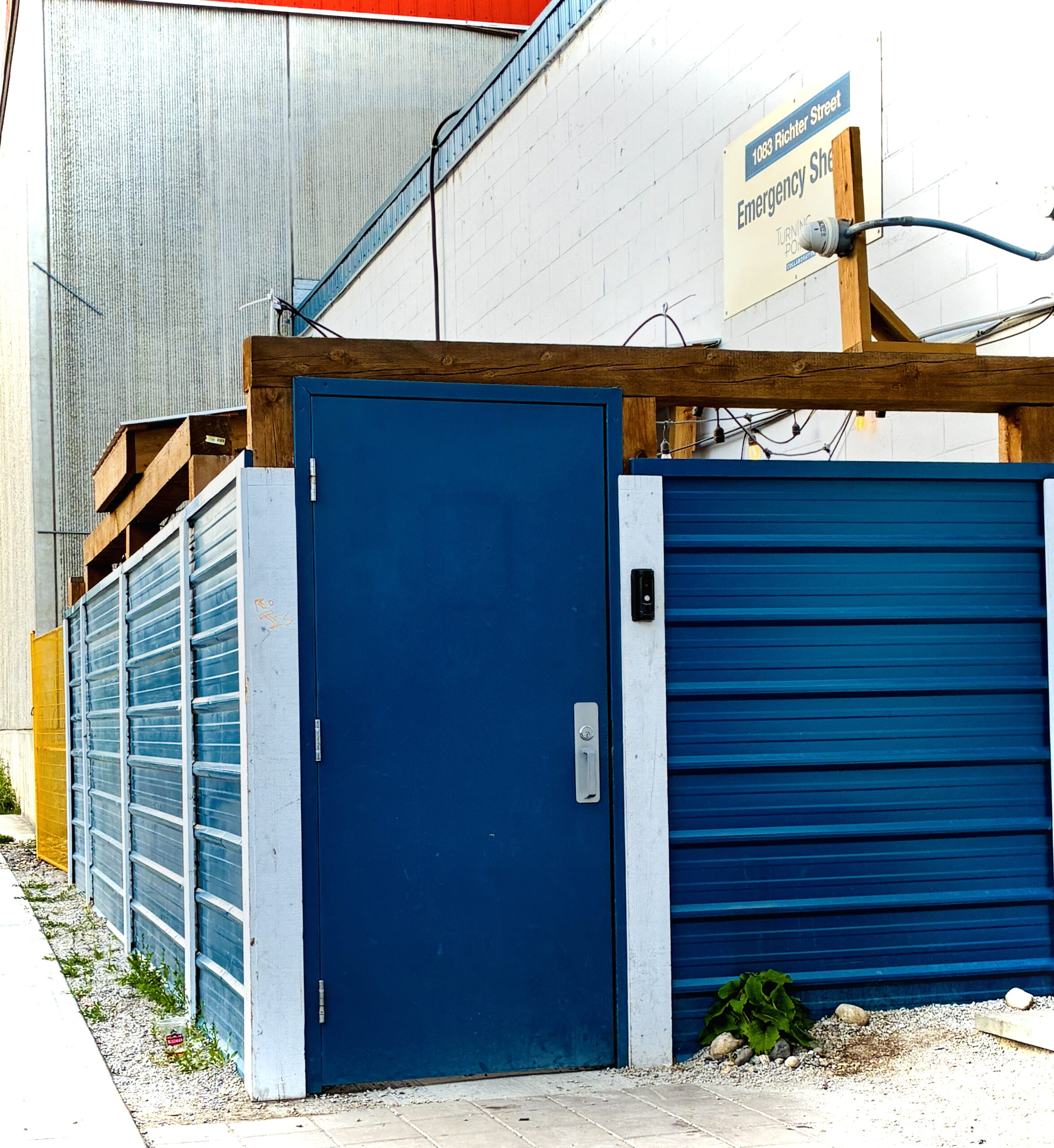
Behind a blue door sits a gravel courtyard enclosed by high walls. On any given day it can be a coffee shop, a workshop, a garden, a music venue, a waiting room, a meeting place, a charging station, a break room, or simply a place to sit quietly for a while.
People gather here with cigarettes, coffee cups, chargers, backpacks, speakers, sketchbooks, groceries, stories, worries, and plans.
Some stay for a few days.
Some for a few months.
Some longer.
The photographs below are not portraits.
They are traces.
A doorway.
A workbench.
A garden.
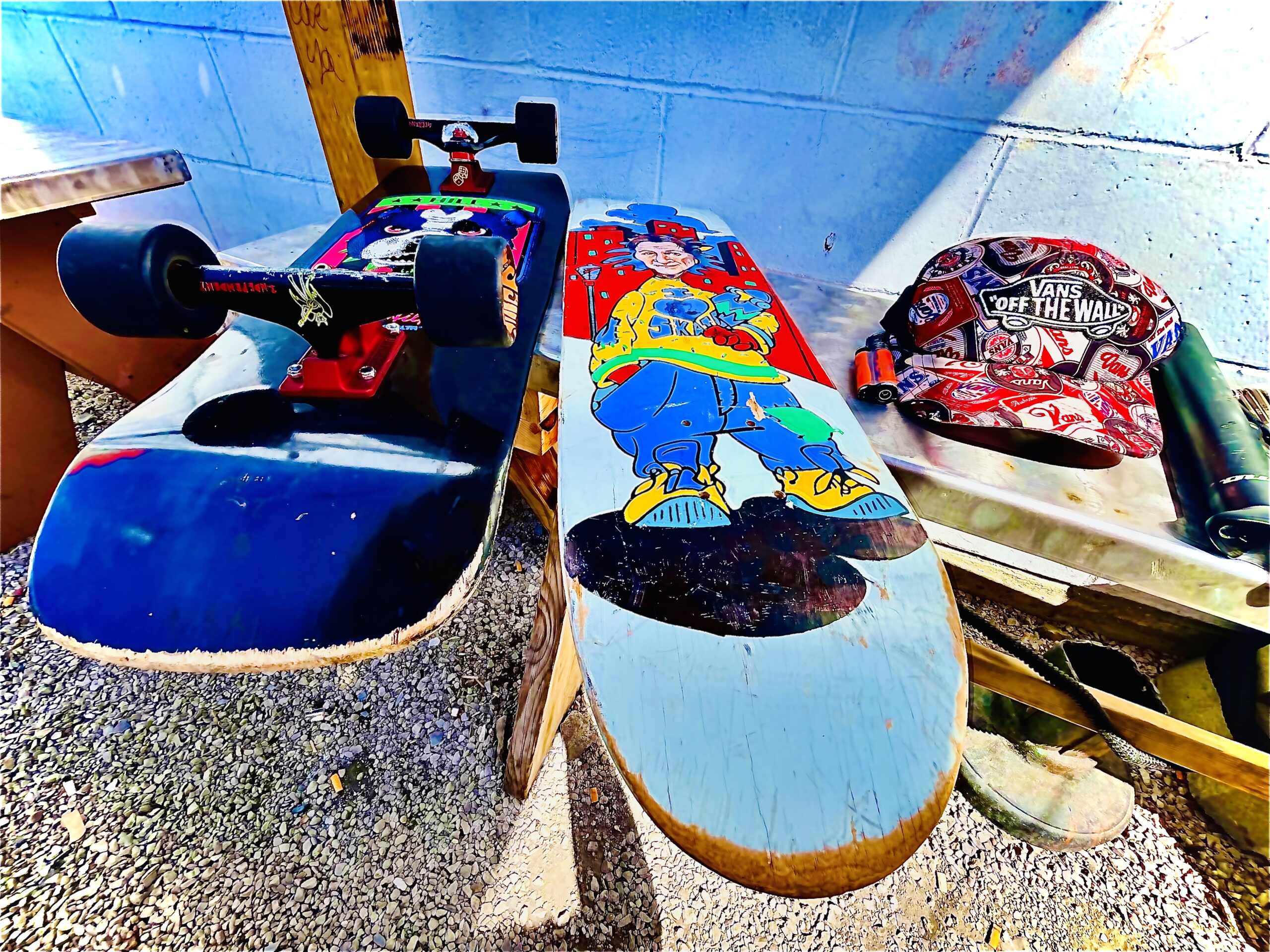
A skateboard project.
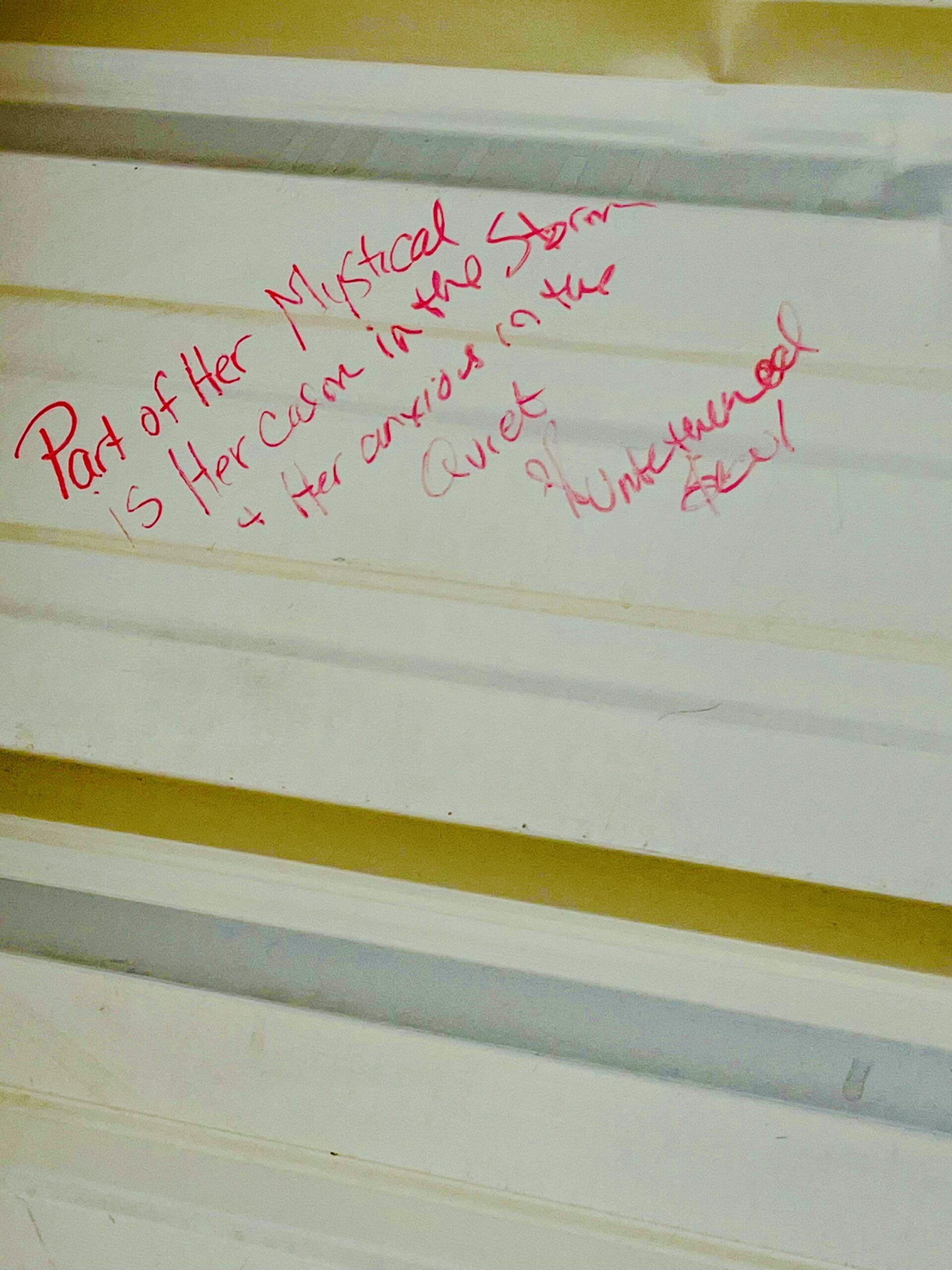
A handwritten note.
A flower.
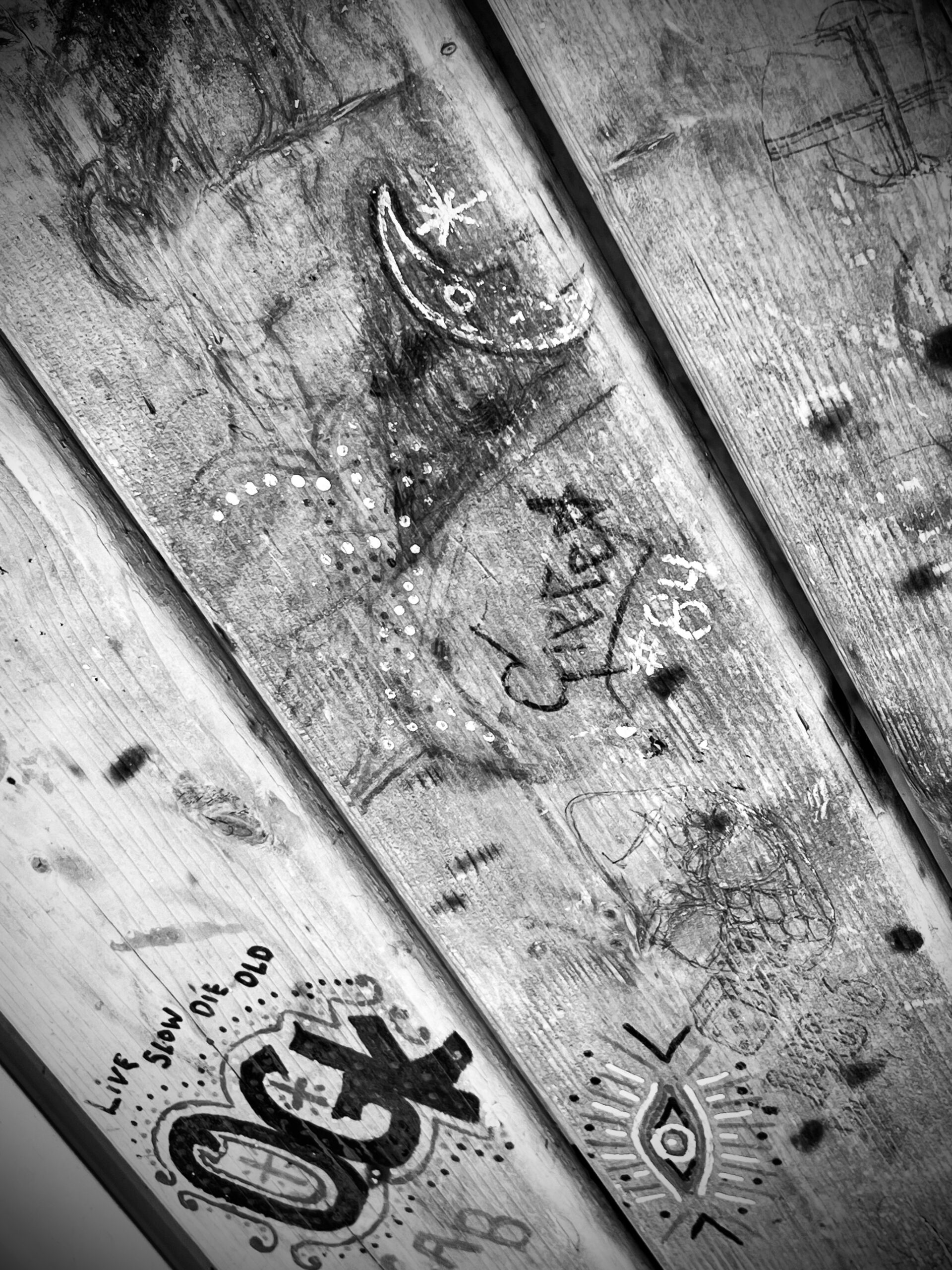
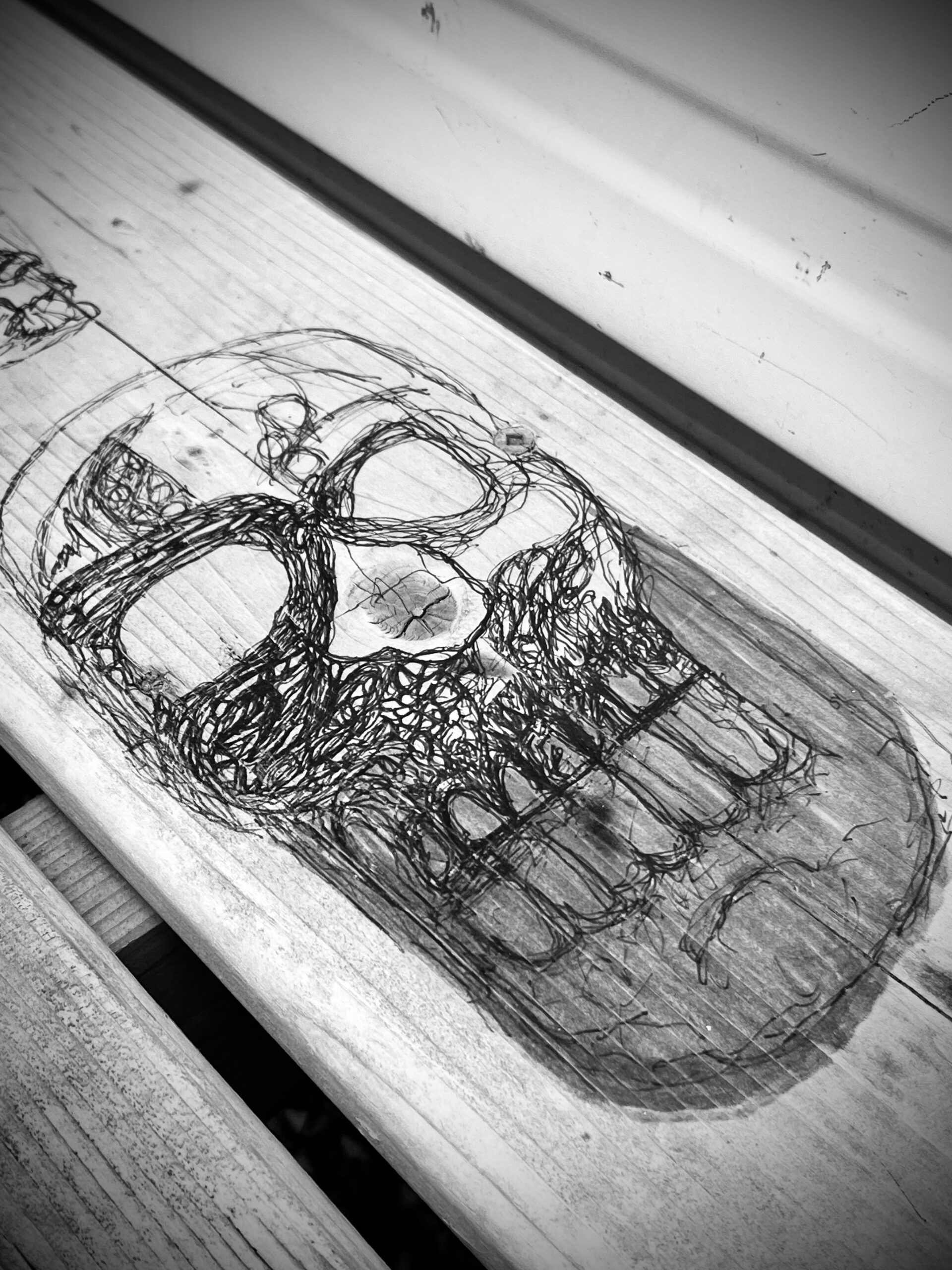
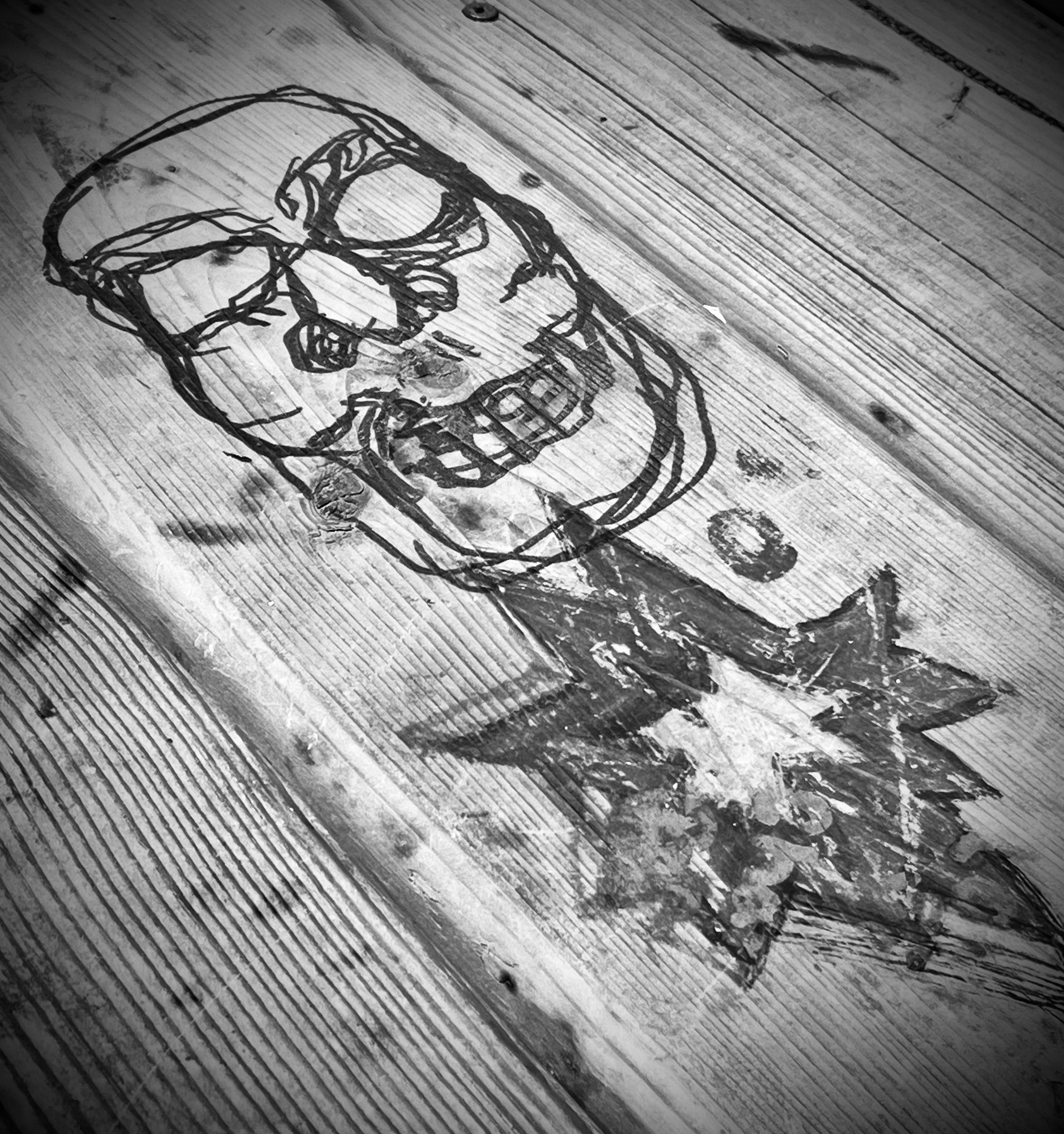
A drawing on a bench.
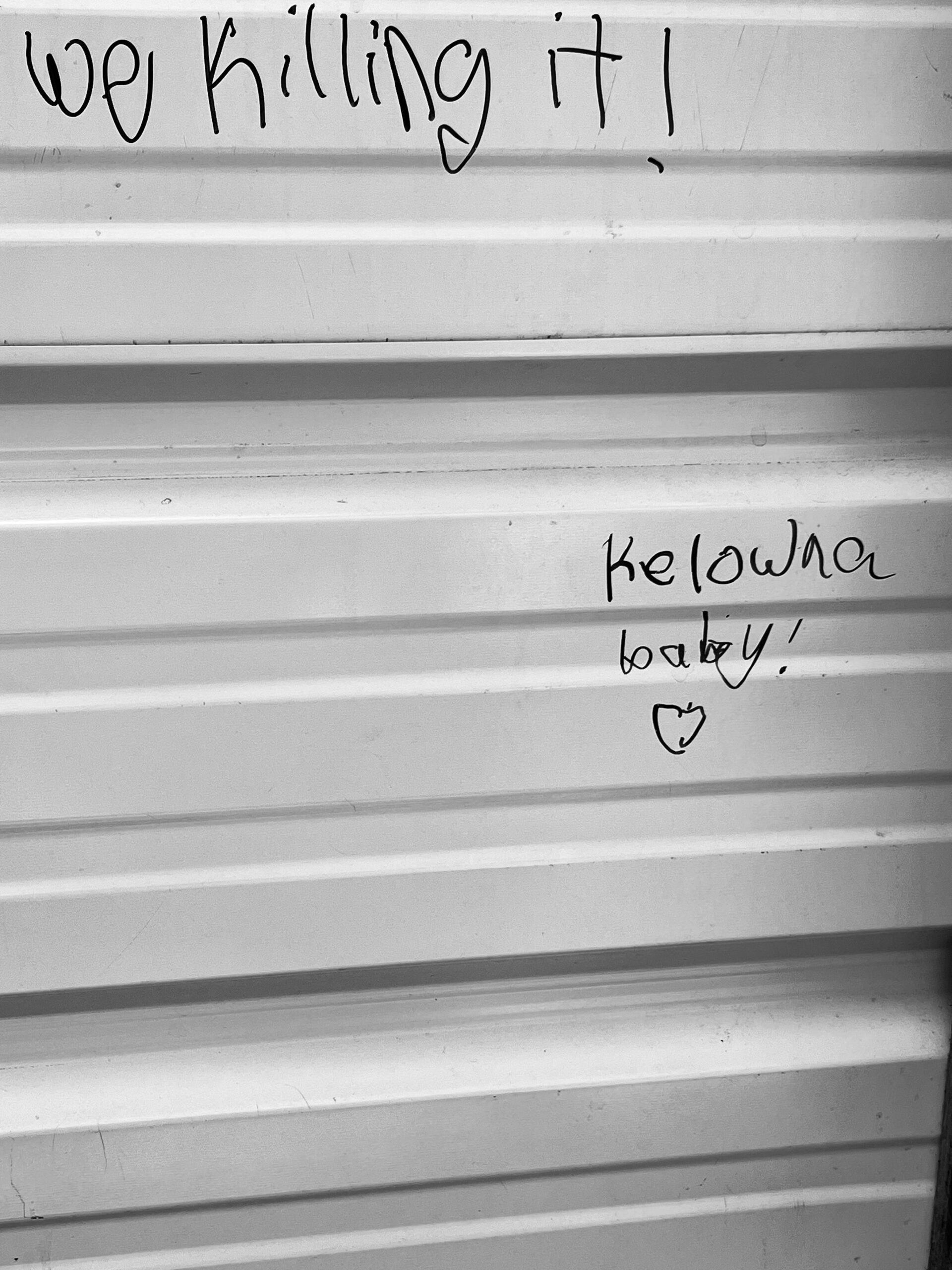
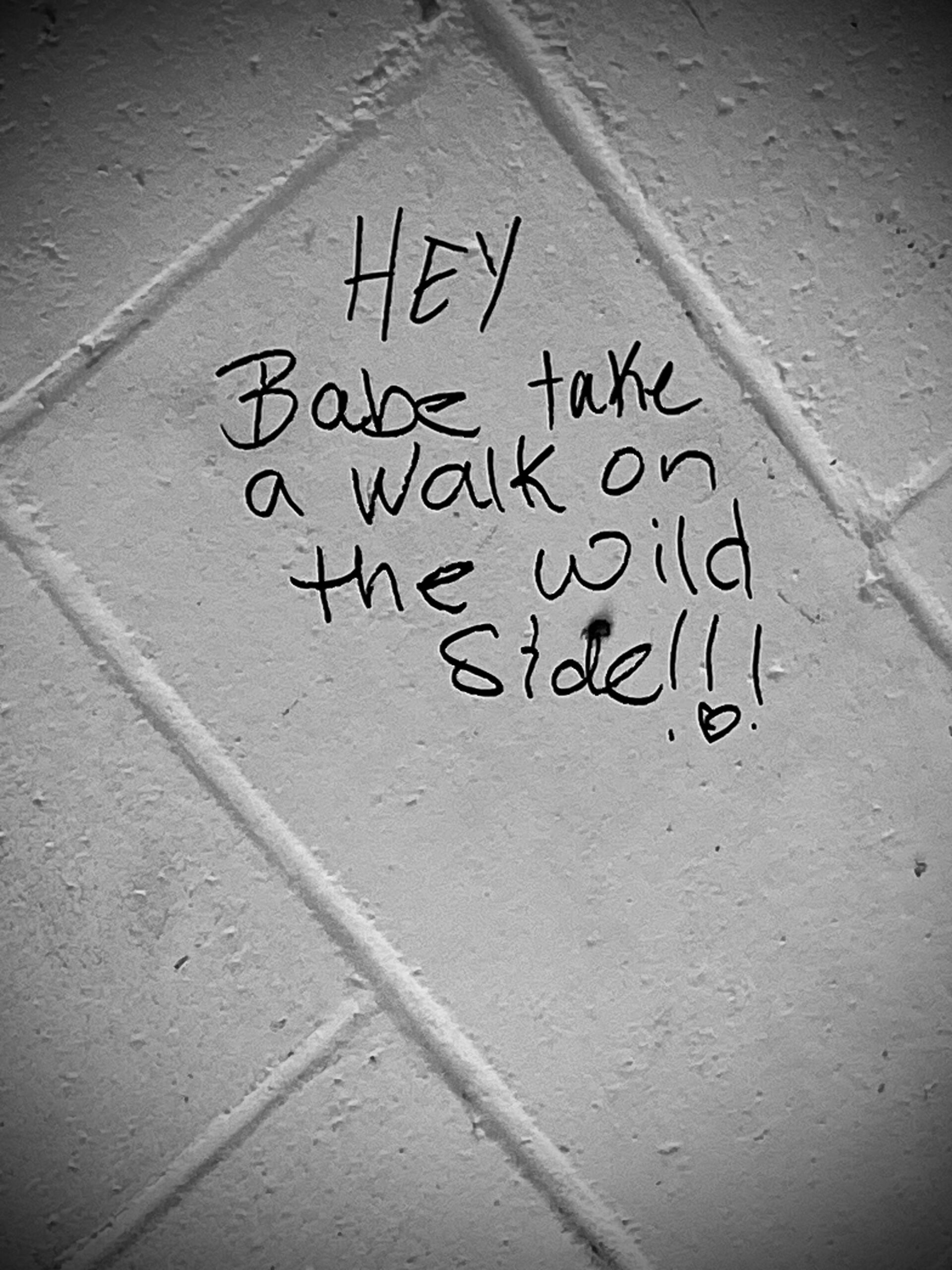
A message left on a wall.
Evidence that people were here.
Evidence that they cared.
One thing I’ve learned while working on these dispatches is that I can only describe the visible edges of another person’s life.
I can describe a conversation.
A laugh.
A shared cigarette.
A cup of coffee.
A community garden.
A note left behind on a wall.
What I cannot describe is another person’s inner world.
I do not know their fears.
I do not know their regrets.
I do not know what keeps them awake at night.
At best, I can describe the traces they leave behind and the moments where our paths happened to cross.
Every person here contains a story far larger than any photograph could capture.
What follows is not an attempt to explain anyone.
Only an attempt to witness.
The Pit is may be described as temporary like
the people passing through the shelter.
The garden suggest otherwise.
The artwork suggests otherwise.
The messages suggest otherwise.
The community certainly suggests otherwise.
For all its imperfections, The Pit is a place people have shaped, maintained, personalized, and made their own.
And in the end, perhaps that is what these photographs are really documenting.
Not a shelter courtyard.
A community.
A doorway into a community most people never see.
The blue door leading into a shelter courtyard. From the sidewalk it appears unremarkable. Beyond it is a space where people gather for coffee, music, conversation, projects, gardening, charging devices, and community. Like many important places, it is easy to walk past without realizing what exists on the other side.
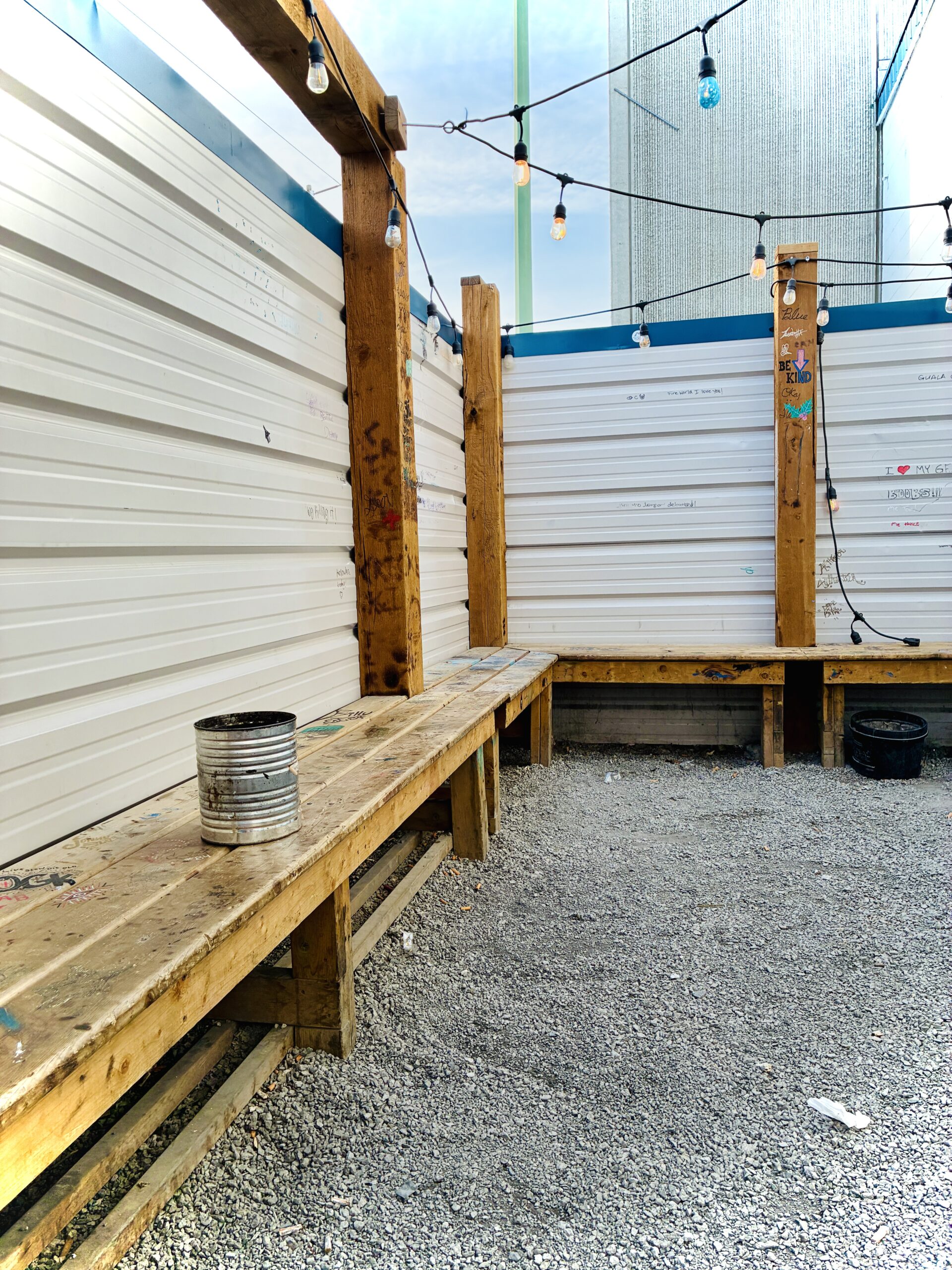
A room without a roof.
Long benches line the perimeter of The Pit beneath string lights suspended overhead. The walls rise well above head height, creating a distinct space within the shelter grounds. Depending on the time of day, this area becomes a coffee shop, smoking area, workshop, music venue, meeting place, or simply a quiet corner to sit and think.
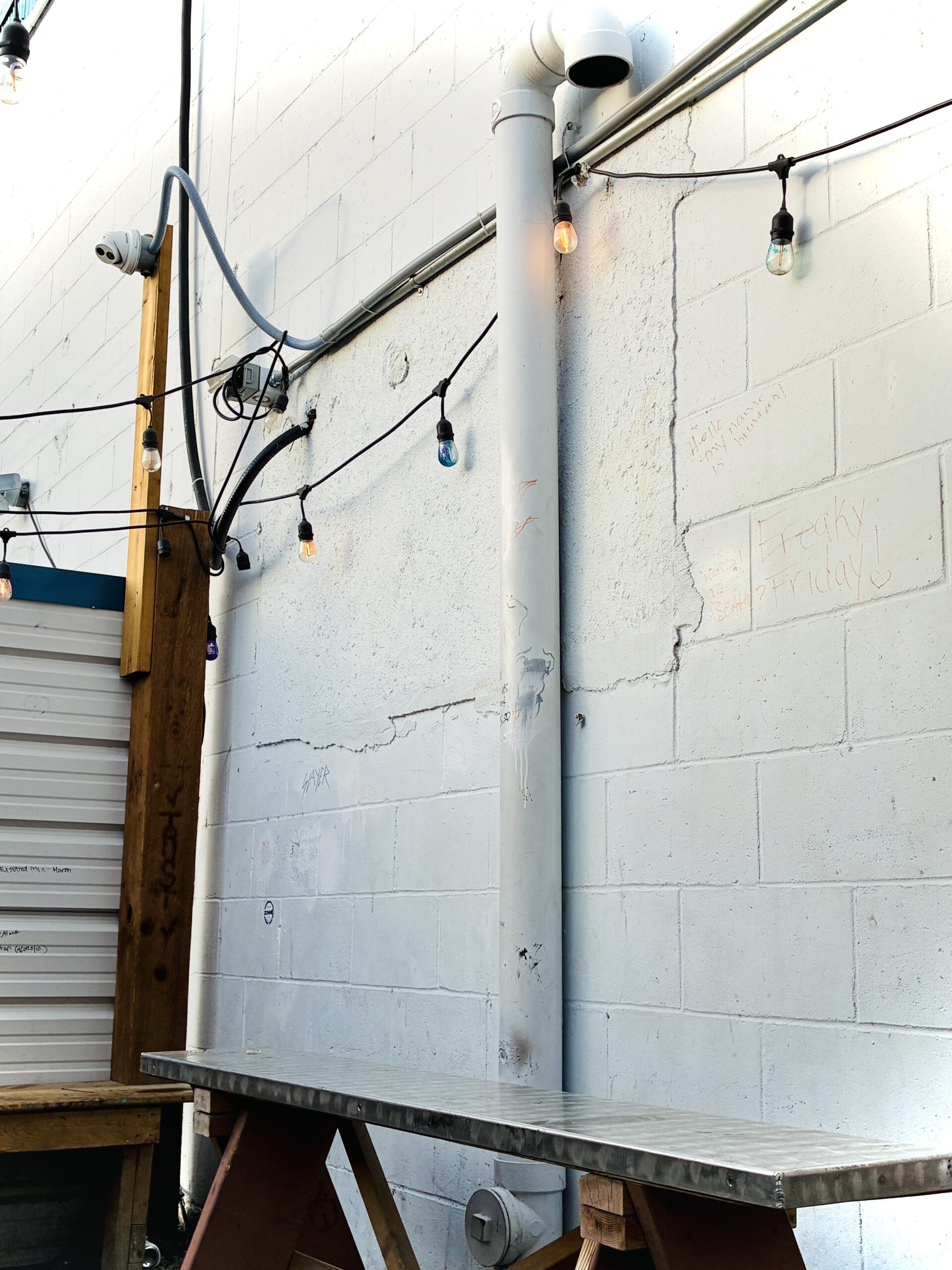
A place to sit, talk, build, repair, and share ideas.
A long bench beneath string lights and utility wiring inside The Pit. Depending on the day, it serves as seating, a gathering place, a coffee spot, a conversation space, or a workbench for projects and repairs. Like much of The Pit, its purpose changes according to the needs of the community using it.
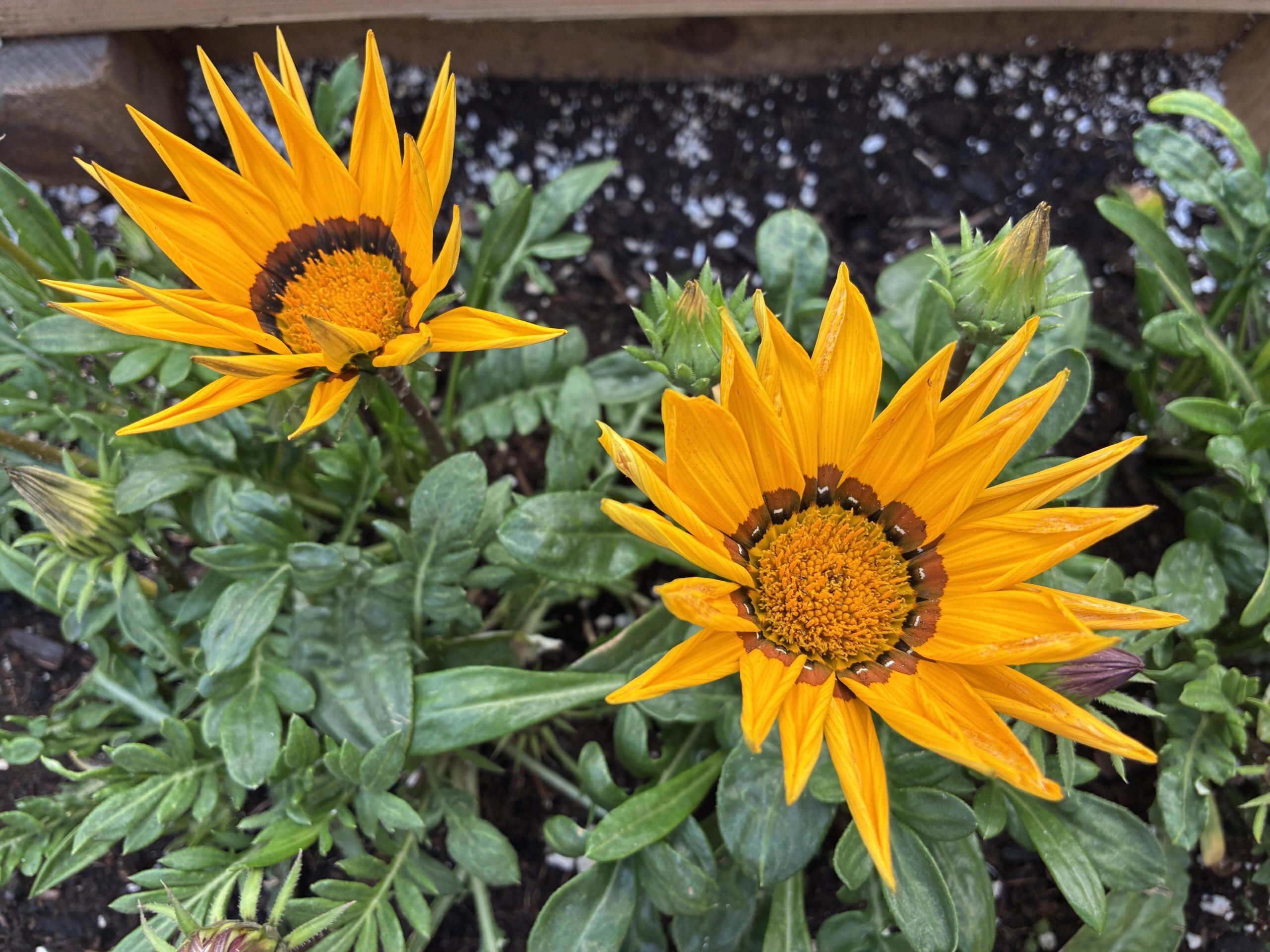
A little sunlight rooted in the gravel.
Golden flowers growing in a raised garden bed inside The Pit. The gardens are among the first things visitors notice and among the last things many expect to find in a shelter courtyard. They reflect the care, effort, and pride invested by the people who share this space.
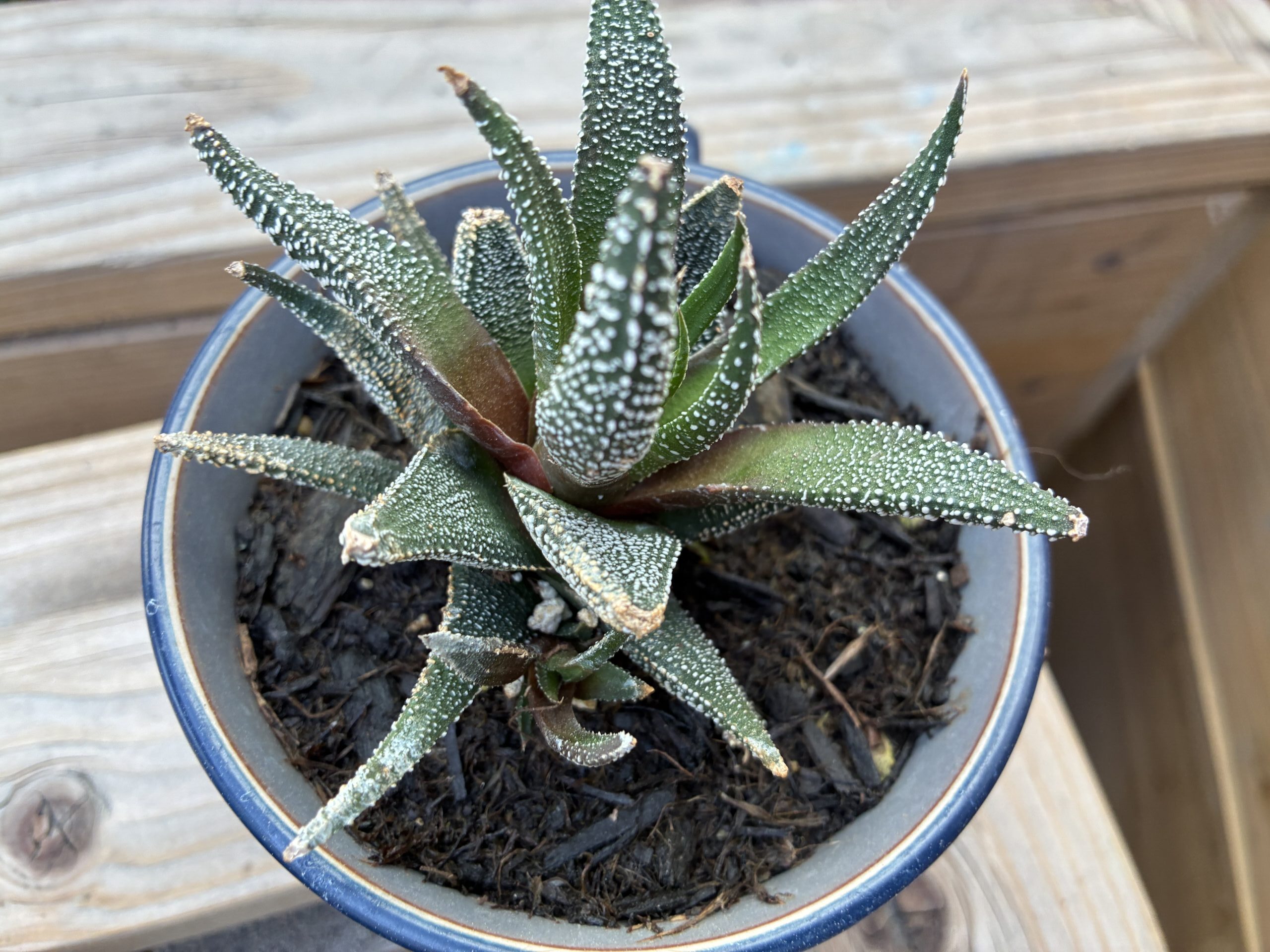
A small potted succulent resting on a bench in The Pit. Amid the larger gardens, projects, and daily activity of the courtyard, small personal touches help transform a shared space into a place that feels lived in and cared for.
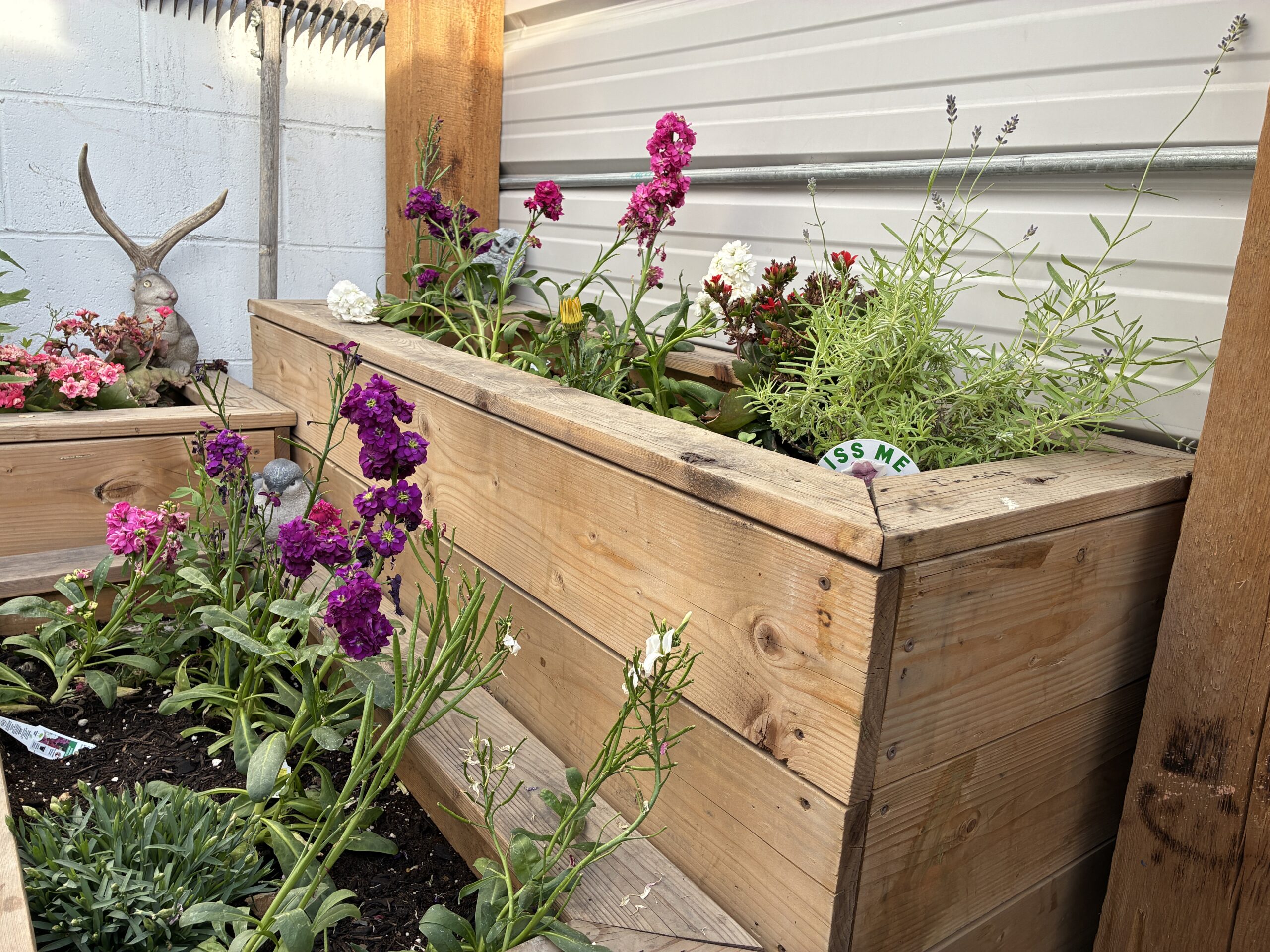
People invest in places they hope will grow.
Flowers, herbs, and other plants growing in raised garden beds inside The Pit. Small details, decorations, and careful planting reflect the time, effort, and attention invested by the people who maintain this shared space. The gardens bring colour, life, and a sense of permanence to a place often associated with temporary living.
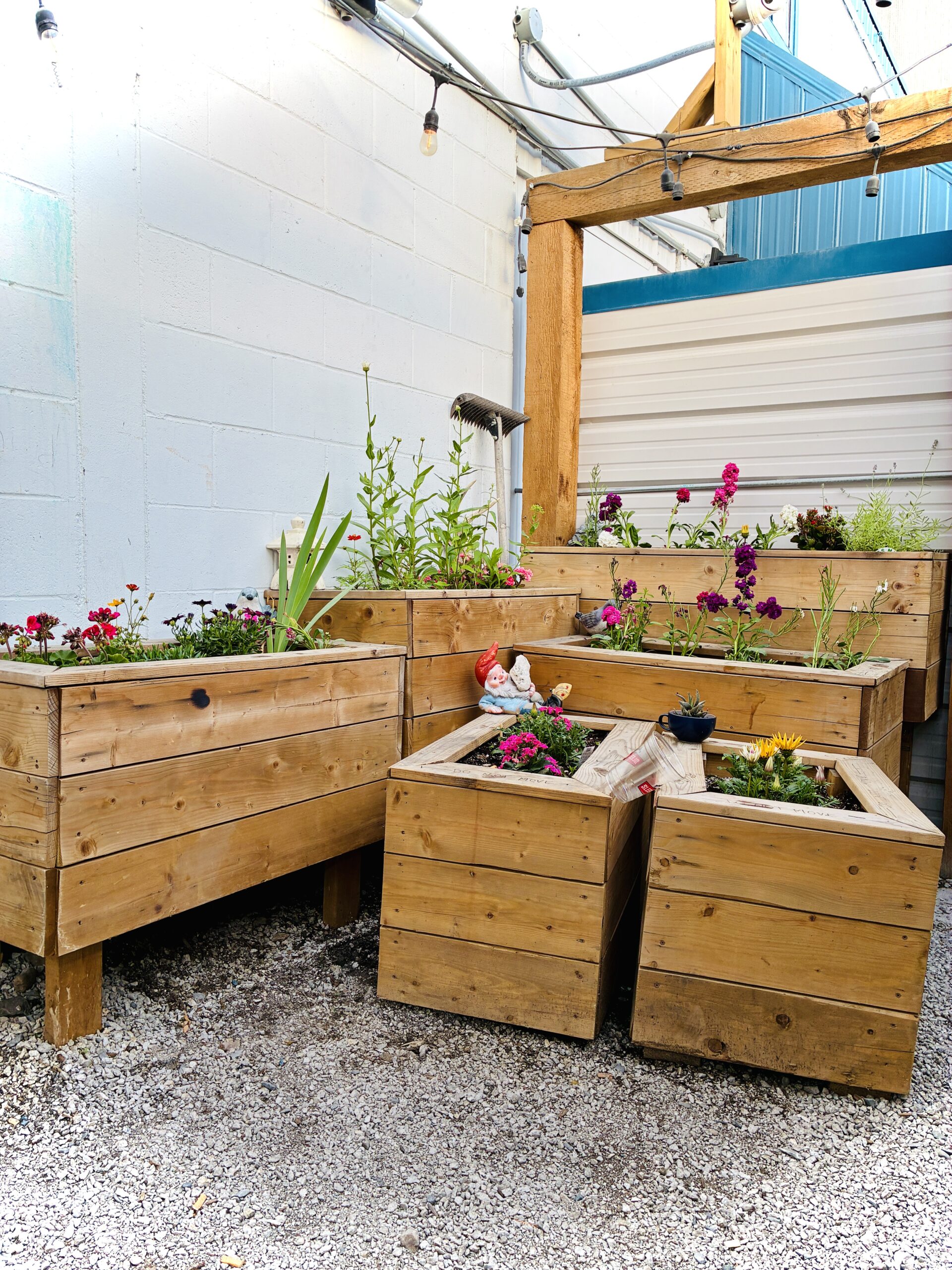
Communities grow where people decide they matter.
A collection of raised garden beds inside a shelter courtyard. The flowers, plants, and planters represent countless hours of work, care, and maintenance. In a place often associated with temporary living, the gardens are evidence of people investing in something larger than themselves and creating beauty in a shared space.
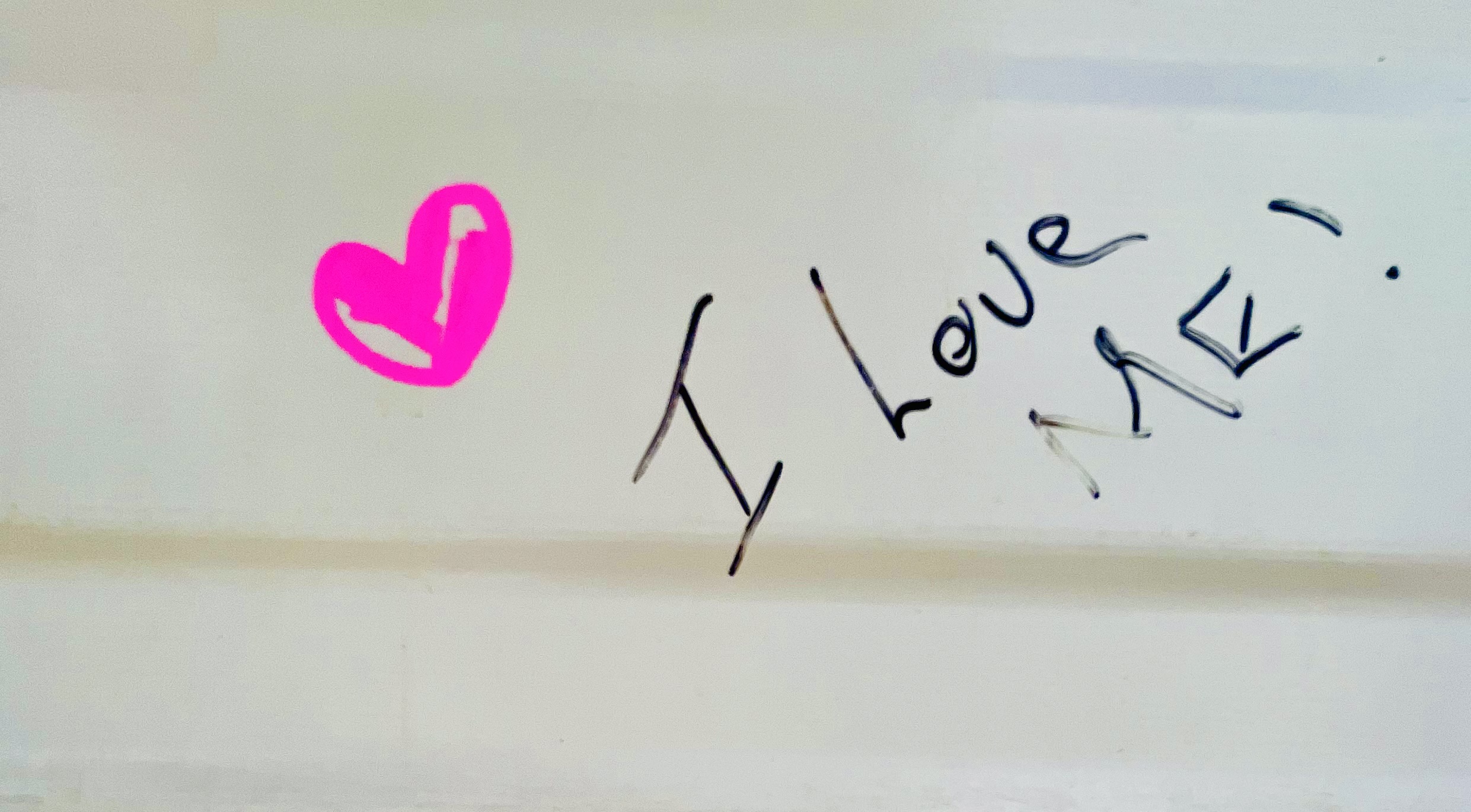
Sometimes the simplest messages are the hardest ones to believe.
A pink heart and the words "I Love Me!" written on a wall inside The Pit. Among the humour, artwork, reflections, and conversations scattered throughout the courtyard, this message stands out for its simplicity. In a place where many people are rebuilding parts of their lives, self-acceptance can be both a challenge and an act of courage.
Every shared space collects stories.
Drawings, signatures, symbols, and markings cover the surface of a well-used bench in The Pit. Created by different hands at different times, the collection forms an informal record of people who passed through, spent time here, and left a small trace of themselves behind.
Part of her mystical is her calm in the storm - her anxiety in the quiet.
A handwritten reflection left on a wall inside The Pit. Among the artwork, signatures, and messages scattered throughout the courtyard, some notes read like personal observations or fragments of poetry. This message was preserved as found, offering a glimpse into a thought whose larger story remains unknown.
Optimism has a way of appearing where people least expect it.
Handwritten messages on a wall inside The Pit. Among the gardens, artwork, music, and conversations, small notes like these become part of the character of the space. They are reminders that humour, pride, encouragement, and personality exist alongside the challenges of daily life.
Not every artist signs their work.
A detailed skull drawing sketched onto a bench inside The Pit. Like the notes, signatures, and other artwork found throughout the courtyard, it reflects the creativity and expression of people who have spent time in the space. The drawing remains long after its creator has moved on.
A different hand. A different day.
A second skull drawing found on a bench inside The Pit. Throughout the courtyard, artwork, messages, signatures, and sketches accumulate over time. Individually they may seem small. Together they become part of the visual history of a shared space.
Messages left behind.
A handwritten message discovered on a wall inside The Pit. Like much of the graffiti and artwork throughout the courtyard, it offers a glimpse into the humour, personality, and creativity of the people who have spent time here.
The Pit isn't just a place to smoke. It's also a workshop, gathering place, and creative space.
Two skateboards being worked on inside The Pit. The courtyard serves many purposes beyond shelter life alone. People gather here to drink coffee, listen to music, socialize, decompress, work on projects, share skills, and build community.
—-
Support Personal Dispatches
If you found value in this story, you can learn more about supporting Personal Dispatches here: